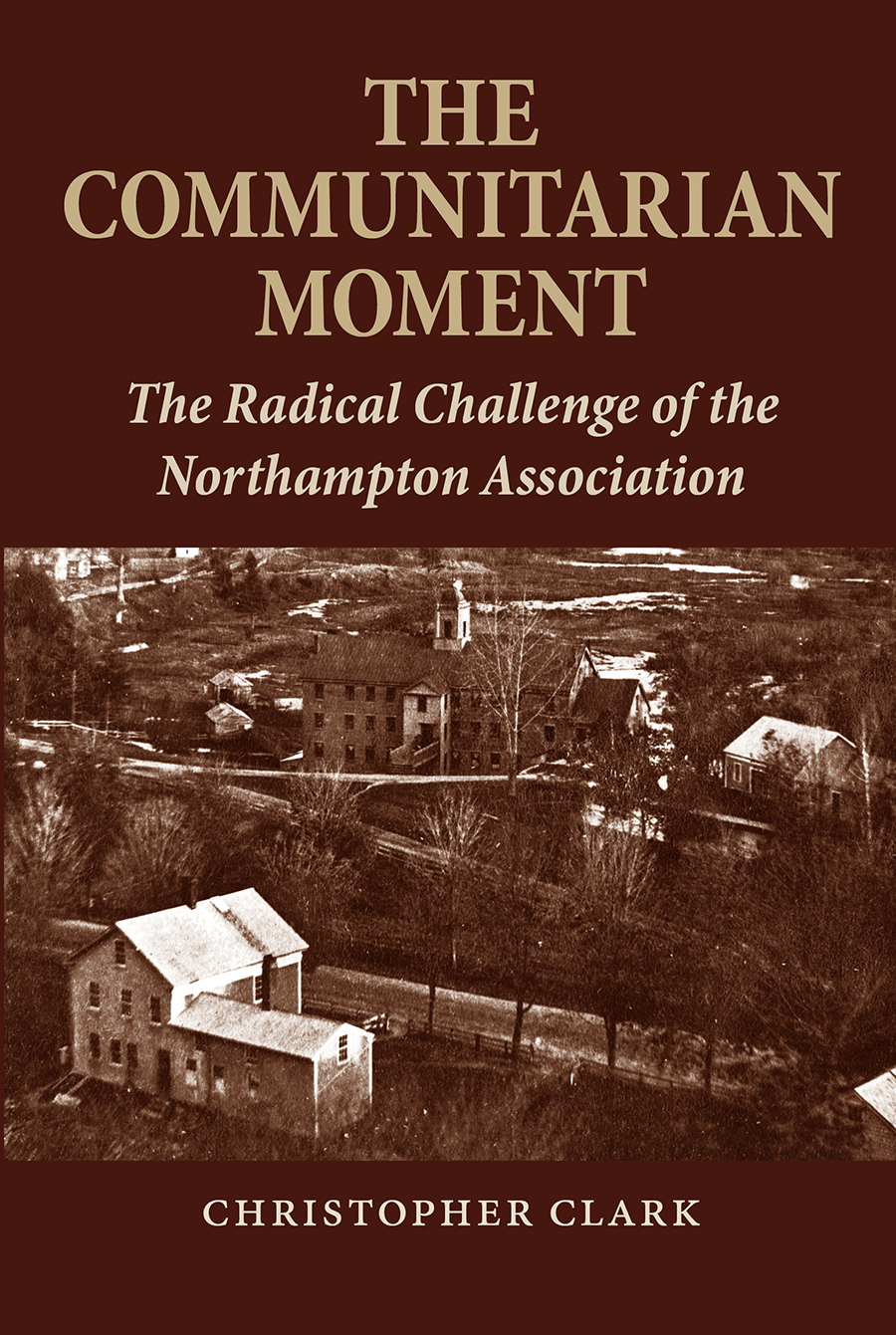
“This is a book about people who stepped outside society in an effort to change it by constructing a way of life that could serve as a model for the future. The men and women who came together in western Massachusetts in 1842 to form the Northampton Association of Education and Industry were among dozens of groups in North America and Europe who at that period saw forming communities as the best opportunity for social progress. …That they sought to alter society, and in doing so explored its boundaries and ideological limits, makes their story a revealing one that we can use to help understand the broader patterns of cultural and ideological change for which the 1840s were so important.”
“Clark has written an important book, one elucidating the vision of some quite practical people. Eventually, bowing to continuing external adversity, the challengers retreated, the ‘moment’ passed. Making exemplary use of wide-ranging research in primary sources and of the relevant scholarly literature, Clark is instructive in how we remember their challenge.” —Communal Studies
“Clark has meaningfully brought to life a period in American history when society seemed corrupt but redeemable through the efforts of individuals banded together in a utopian community dedicated to social justice, economic equality, and religious toleration.” —Utopian Studies
Christopher Clark is professor emeritus of history at the University of Connecticut. His book The Roots of Rural Capitalism: Western Massachusetts, 1780–1860 won the Frederick Jackson Turner Award of the Organization of American Historians. Clark is coeditor (with Kerry W. Buckley) of Letters from an American Utopia: The Stetson Family and the Northampton Association, 1843–1847.